January 16, 2026
The Door That Opens in Life
You are invited to the exhibition 'The Door That Opens in Life'
Share
Living Doors
Taking the moment to understand and make sense of subtle things
Gonca Sezer, who has completed her painting education in Turkey and the USA pursues her diversified artistic production as a long established artist, for nearly 40 years now. The artist initially gained visibility in the art scene through her participations in “young generation” exhibitions. Sezer, who -starting from the end of the 1980s- attended projects depicting the “modernization” period of Turkish paintings, has by the end of the 1990s included, different and new forms of expression (as of the period) such as found objects and photography in her production process. Sezer's practice, is based on stories of Istanbul, the city where she was born and raised. Stories of her family members from Samatya, their family albums and the napkin collection coming from her childhood are elements that form the core of her artistic practices.
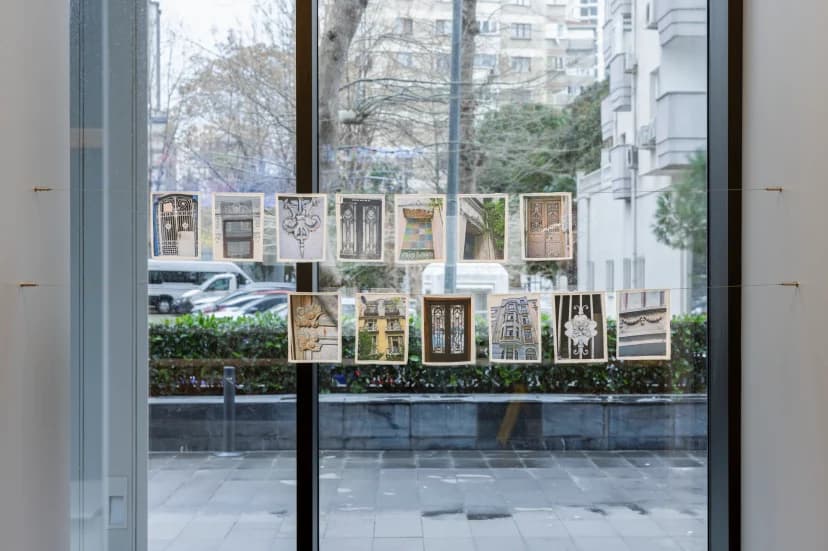
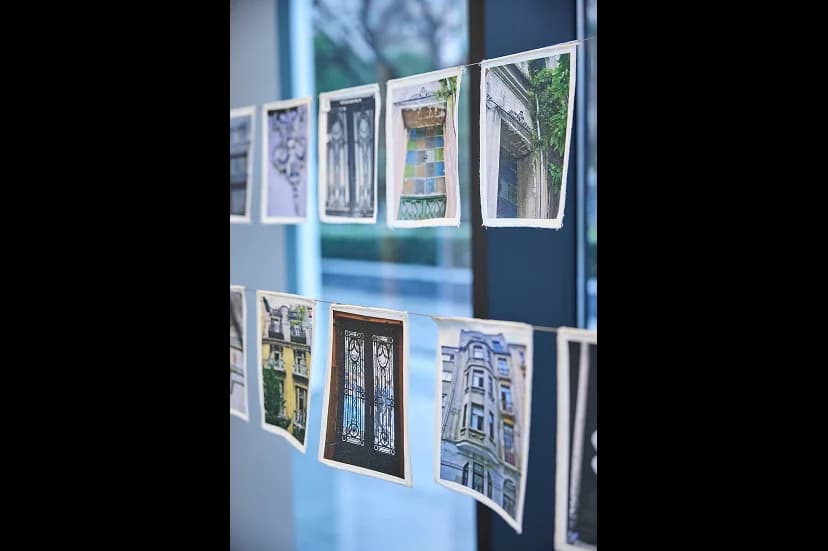
It is clear that Gonca Sezer`s practice and artistic attitude are shaped around the motives of care, dilligence and the instinct for protection: “I am attentive to the environmental, historical changes that I observe around the city or neighborhood I live in, the identities generated within the human-history-surrounding triangle and the findings these have brought to our present day. Sometimes an object or image, it can be a photograph or a stone, sometimes an iron pattern or an ornament. I take special care to revisit, redig these with the consideration of the present day.” Sezer`s parctices have multiple aspects, many facets. Recently, the artist has been preoccupied with the buildings and doors of Istanbul, and especially the floral patterns on the doors. These “subtle things” becoming the subject matter of her creation, coincides with the time she moves and starts to live in Sisli, Kurtulus. Kurtulus, formerly known as Tatavla, one of the oldest neighborhoods of Istanbul, plays a role in shaping Sezer`s recent practices. The artist, together with the similarities of the plants and flowers, as part of the existing flora of Istanbul (like holy hocks, ladies eardrops, acorns), intends to make visible again and maintain the memory of repeating ornament motives and flowerlike stonecut forms used on doors which she witnesses in her walks every day.
Sezer exhibits her installation “Silent Flowers”, one of her recent works, at Barin Han as part of the exhibition “In the Ruins” in 2024. According to Oguz Karayemis, “Silent Flowers” treating ornaments in remnant spaces with the same logic, offers them a new graphical life:
”She not only preserves them in the face of oblivion and destruction, but also transforms them within new relations with humans and non human animals, plants, streets and walls, in short with the city.”
Nested and Coexisting
Times, media, materials, techniques nested in each other and coexisting with that what is personal and social occupy in Sezer`s work an important place. Utilizing the notion of time relatively and open-endedly, the artist speculatively makes use of the archives. There is no hierarchy of materials in her artistic practice. Although she is a graduate of the Academy, an institution shaped by the tradition of oil on canvas, Sezer is one of the influential artists of a generation striving for change in materials and becoming free. Sezer is interested in everyday materials and found objects developed by feminist art against the centuries of ‘high’ and masculine art-making styles of academic art. Lately she also includes embroidery and fabric in her works as well.
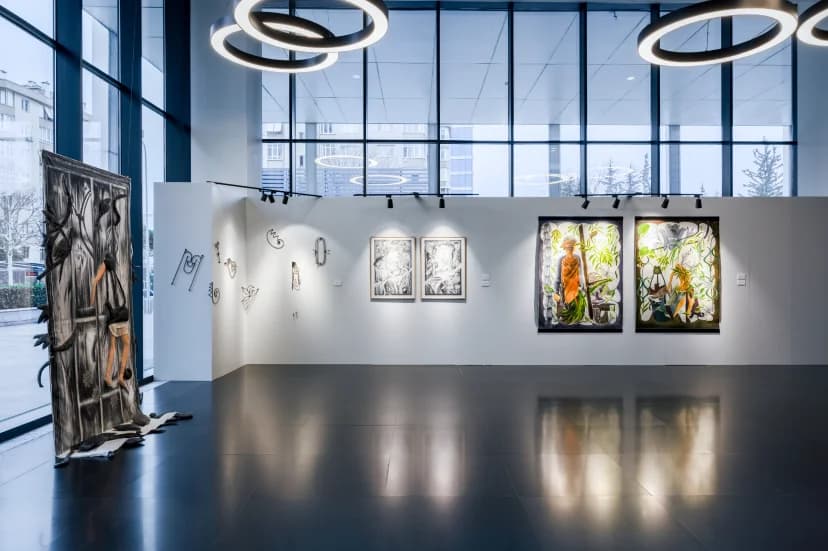
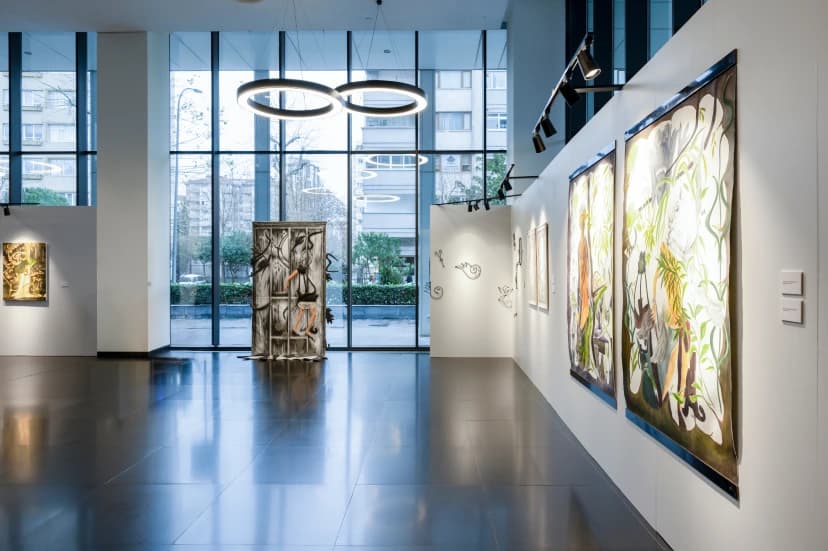
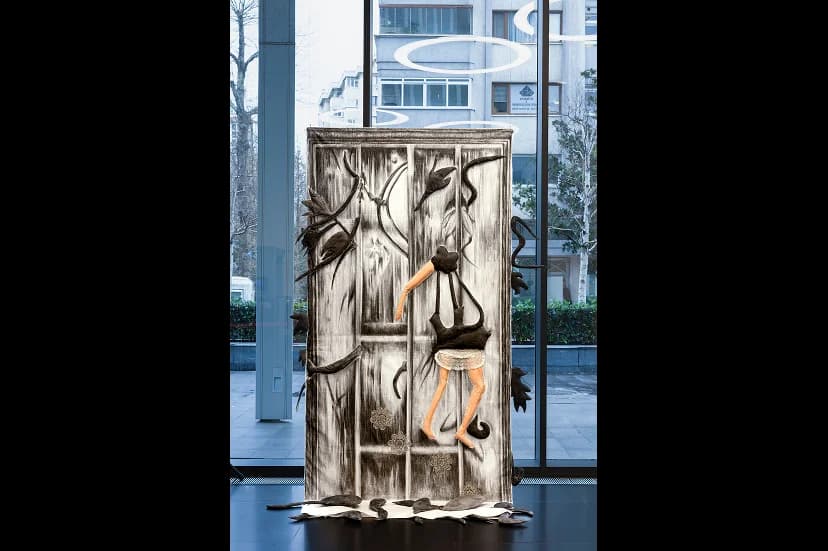
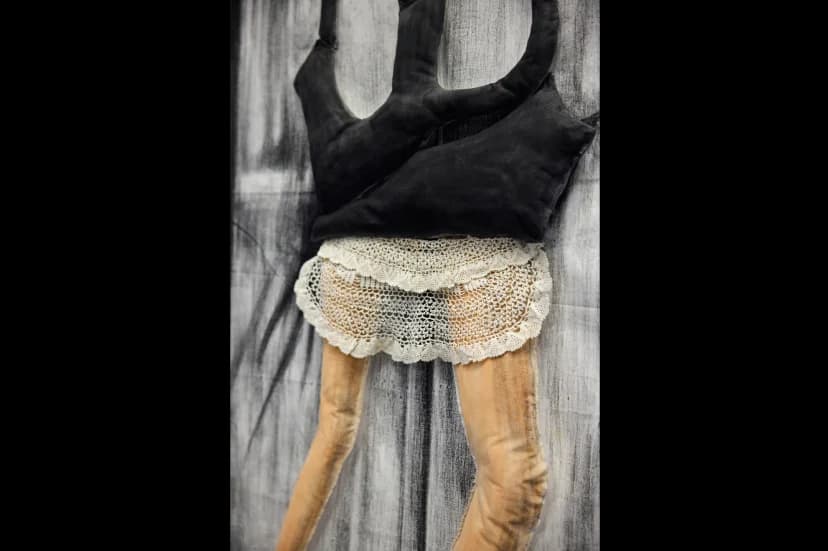
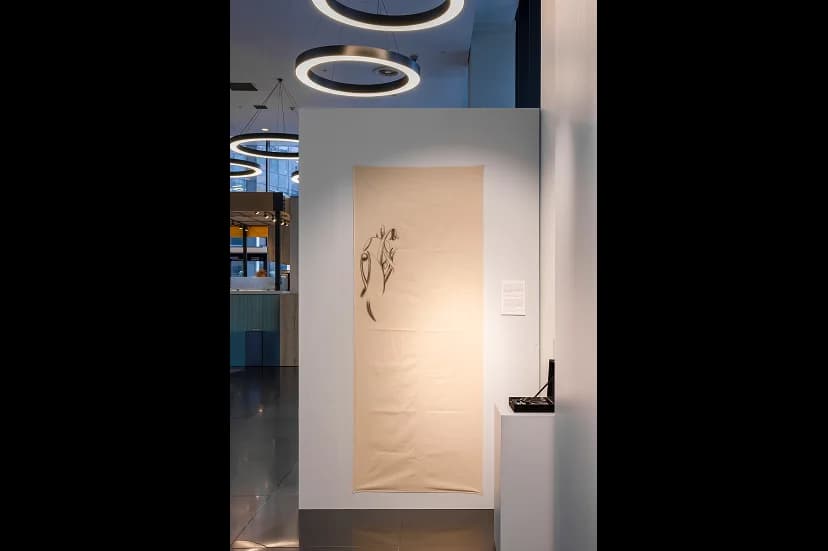
In her work “Living Doors” that also lends its name to the exhibition in Quick Art Space and is placed in the center of it, owing to third dimensions like reliefs mounted on fabrics resembling a door, surreal elements are predominant. Laces inherited by Sezer from her mother and aunt, prepared for her dowry, are among the materials of this work. The artist has created floral shapes from these laces which have waited to be found, deep down in a chest for years, never fulfilling their dowry function.
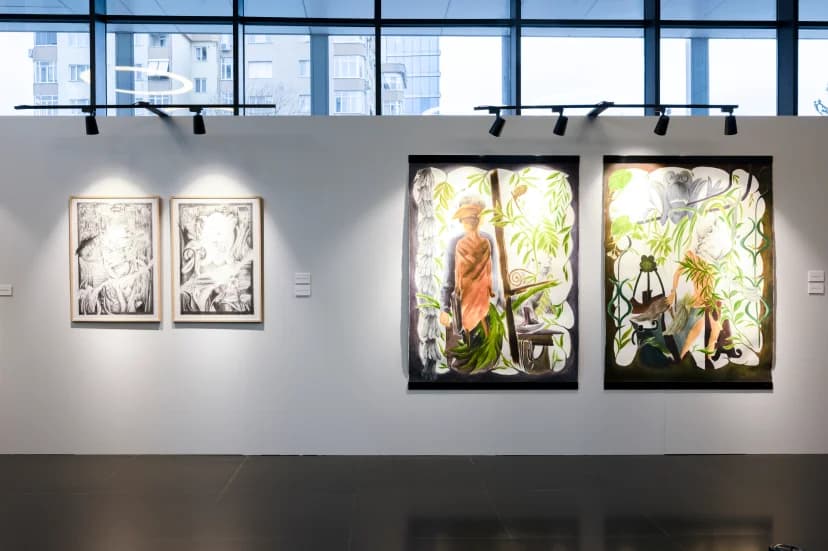
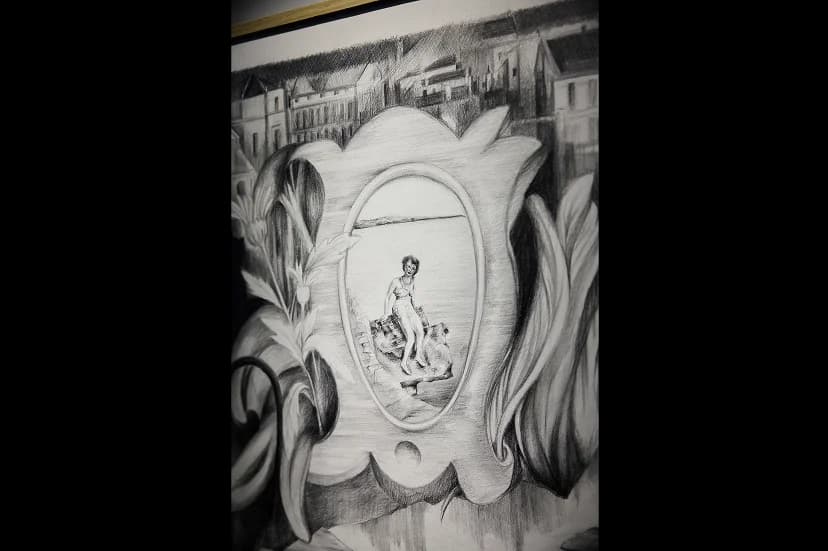
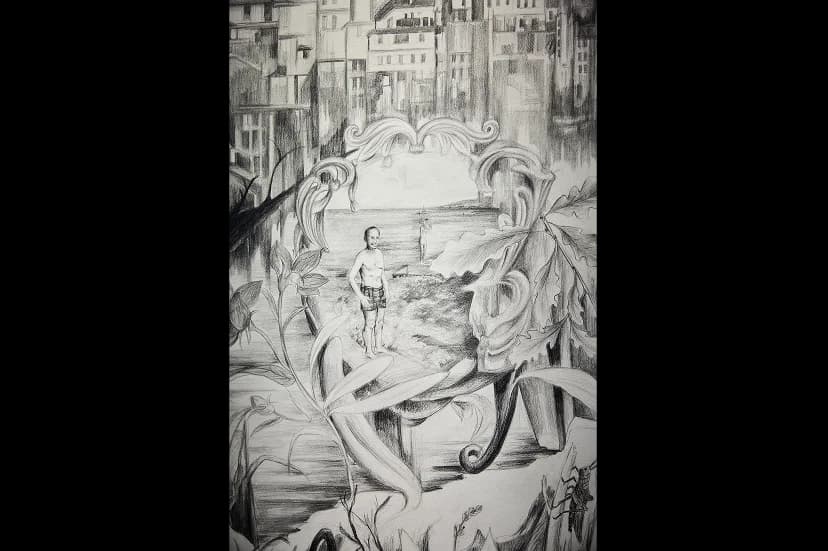
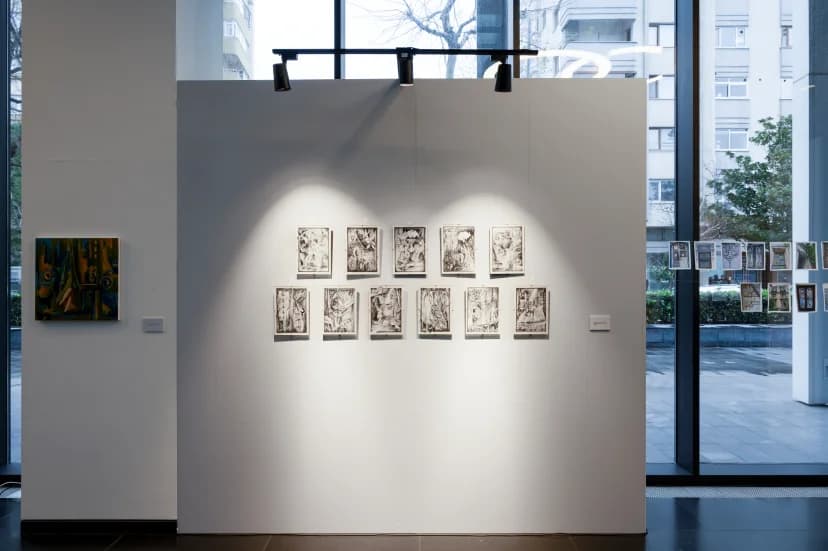
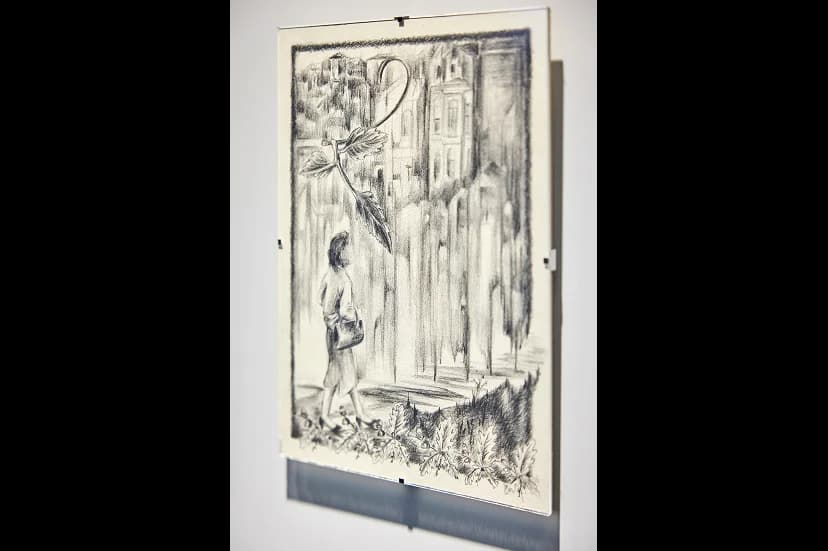
In between two and three dimensions, everyday and vital elements have been finely embroidered on a monumental cloth. Thus the blackness giving form to the background, is a result of the artist`s work with fine-tipped pencil strokes as in the work of a miniaturist. This monumental work of fine craftsmanship and processuality is accompanied by sketches made with pencil on paper. In this work, Sezer uses inherited family photographs and door photographs taken by herself, as her references. Photographs of the artist's parents, taken separately by the sea, are addressed together with the flowers of Istanbul.
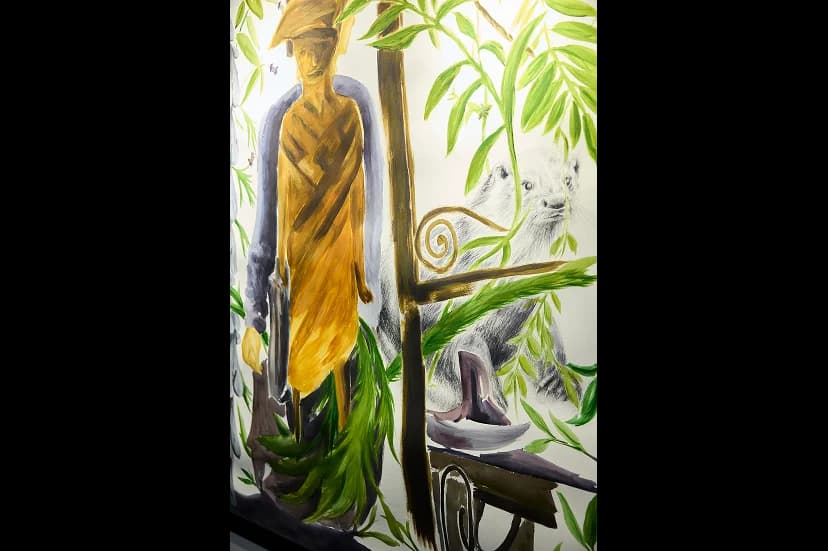
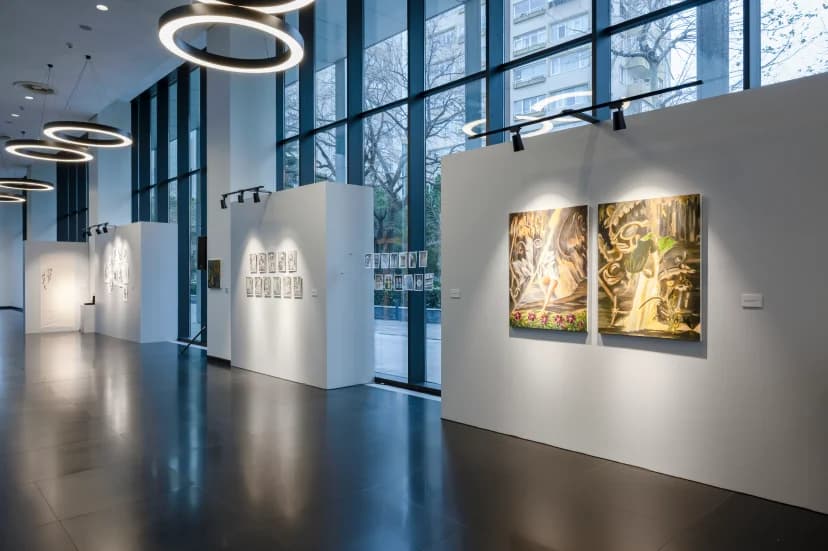
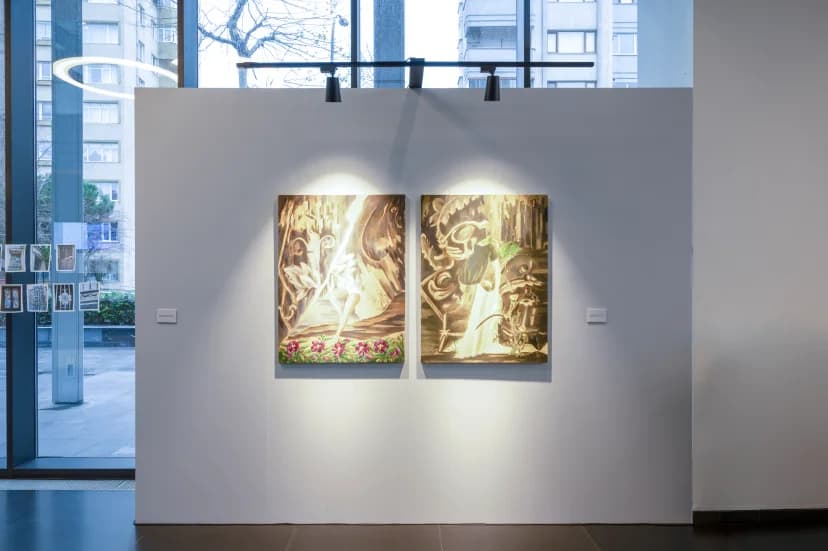
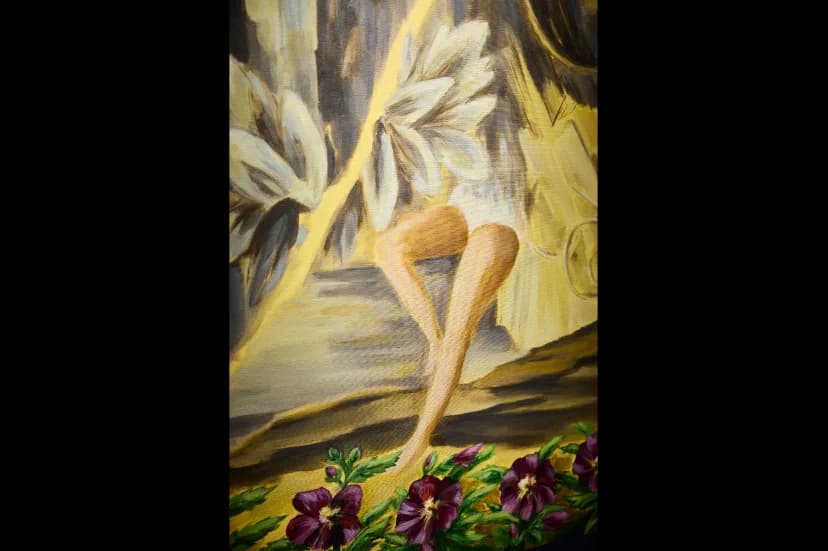
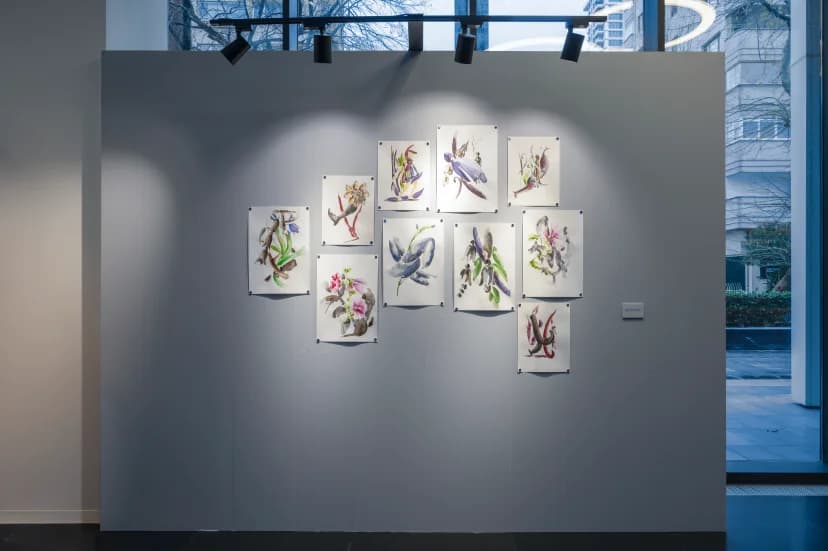
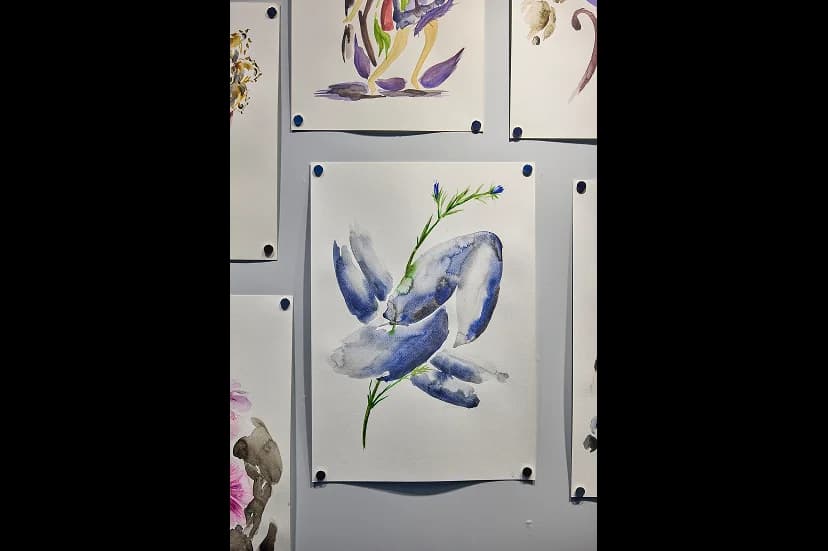
Gonca Sezer's aquarelle on paper paintings in the exhibition, seem to want to attain a new form, a new language by combining nature with abstract forms. Sezer manages to create a deep atmosphere, by utilising the fluidity and transparency of watercolour, adding an organic feeling to the painting with slightly green leaf forms and flower stems or grasses lent from nature. The freedom of the brush strokes awakens a feeling of both calmness and dynamism. The watercolours in which pink, green and brown tones are balanced, bring to mind works categorised as ‘lyrical abstract’ in the history of art. Forms that give the impression of birds or wings, seem to be floating around a flower. The artist creates distinct and dynamic compositions with the abstract interpretation of natural elements. These paintings are the outcomes of a calm but at the same time free understanding of aesthetics, decoding and re-imagining the forms of nature.
Finding-Constructed
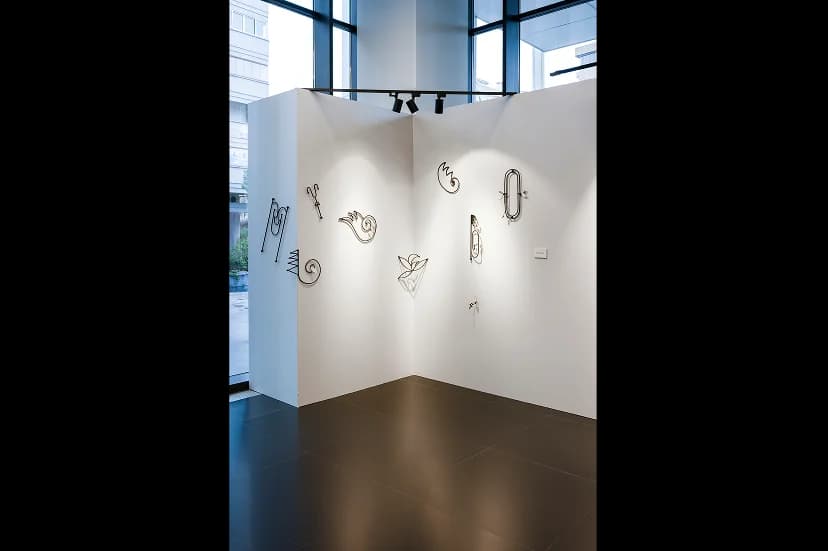
Objects of findings Gonca Sezer uses in her recent works, have delicately been stripped off from their functions. Embroidery purified of its dowry function and amorphous forms made of iron without any function, which have been produced by a craftsman the artist has found in Kurtulus, show that her practice chooses to follow an object-directional path.
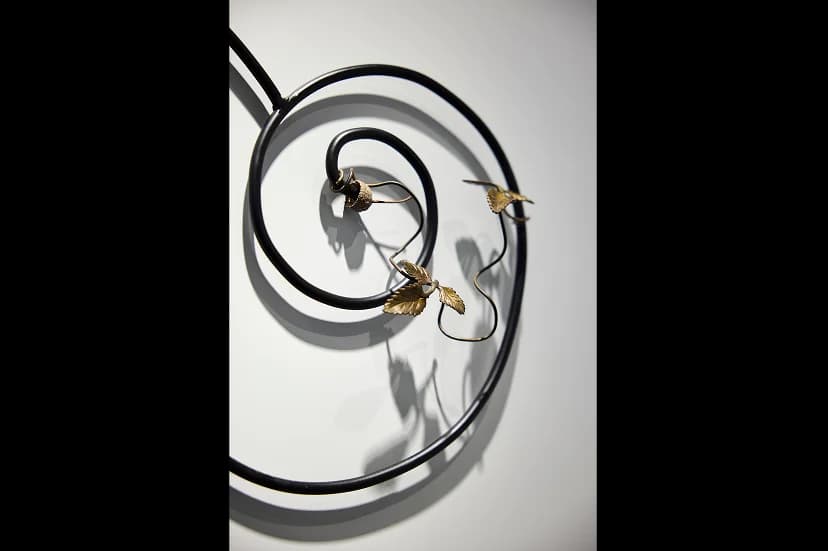
Sezer who is interested in the transformation of flowers - a part of the flora of Istanbul- into motifs only then to stylishly take their places on doors, encounters numerous doors while working on the traces of found objects on her own personal life. These doors invoke an urge in the artist for the creation of a new attachment and so emerge her works where iron and ceramics are used together. Home things in a home, living experiences and the connections between these, show us the creation process of the appliques. Leaves, the nature of the city, its stylised images... The patterns, flowers and leaves on the doors, thus permeate her works. The togetherness of the organic and inorganic are standout features of her recent creations. An organic plant like acorn, which is mostly planted as a prevention precaution from erosion, meets iron and ceramicsin the artist´s works.
Sezer who never returns from her walks or bike rides empty handedly, says “The subjects I am interested in, come to me within life.” 4 The umbilical cord is established spontaneously with each new project she works on, reads or sketches. In her previous exhibition “A matter of Tail” the artist establishes a relation between animals facing danger of extinction and the notebook of her aunt, Firdevs Tarimtay who married after dropping out of school. In this work she also traces back her aunt`s life -a life crowned by marriage-, Firdevs who instead of going to high school adopts the name “Hayriye” and starts to work in a fashion house. Sezer in a way, is almost a mediator of these stories and life experiences into which she is born into or finds herself in.
As an artist born in Istanbul, back then a city around 2 million inhabitants, Gonca Sezer`s works implicitly confront us with issues like settlement, unsettlement, forced displacement in a city that has reached tenfold of its population now. A city continously subject to radical changes day after day. Displacement is not something only humans are subject to, plants and animals have been displaced throughout history as well. To be rooted in the universe of human-flora and fauna, to be grounded, coming from the soil and returning to it, fragility, vulnerability, these are thoughts that rush to my mind looking at Sezer`s works. Gonca Sezer`s artistic practice is inherently showing care rather than nostalgia, taking its moment to stop and appreciate subtle things.
Curator: Event.Gonca Sezer
Date and Time:
Photos from the Exhibition